
Time Series Database fundamentals
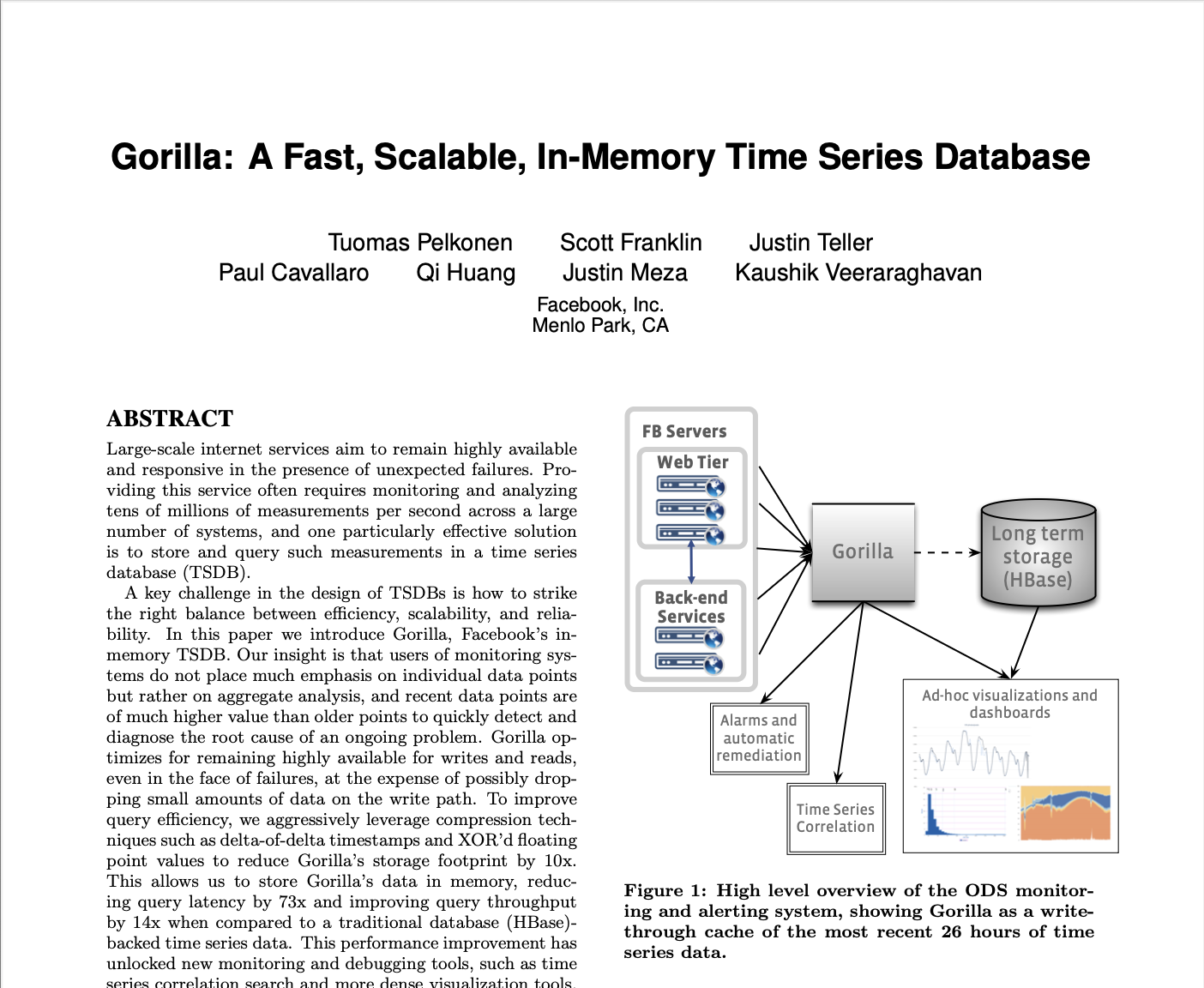
My current implementation is based on this paper and some other implementations that inspired me. Code is not fully tested and will be updated as and when I write more tests.
At this time I am learning about Time Series Databases and this is just one part of it.
The ADTs
open Bin_prot.Std
open Bigarray

module  Datapoint_vector = CCVector

type data_point= {
	tstamp  :    float;
	value :   int64;
}
[@@deriving bin_io]

module Compressed_data_vector =  CCVector

type timeseries_block = {

    start_time : float;

    points: data_point Datapoint_vector.vector;

    compressed_data: ((int,int8_unsigned_elt, c_layout) Array1.t) Compressed_data_vector.vector;

    compressed_size: int64;
}

module  Timeseries_block_vector = CCVector

type time_series = {

    key : string;

    mutable active_block: timeseries_block ;

    closed_blocks:timeseries_block Timeseries_block_vector.vector;

}

type compression_stats = {

    original_size: int64;

    compressed_size: int64;

    compression_ratio:  ((float,float64_elt, c_layout) Array1.t) Compressed_data_vector.vector;
}

module  Timeseries_vector = CCVector

module  Timeseriesmap = struct
  type t = string
  let compare s s1 =
     String.compare s s1
end

module  Indice_map = CCMap.Make(Timeseriesmap)

module  Indice_vector = CCVector

type  time_series_map = {

    series_vector: time_series option Timeseries_vector.vector;

	mutable index_map : int64  Indice_map.t;

    free_indices: int64 Indice_vector.vector;
}

module  Buffer_vector = CCVector

type bit_writer = {

    buffer: ((int,int8_unsigned_elt, c_layout) Array1.t) Buffer_vector.vector;

    current_byte:  (int,int8_unsigned_elt, c_layout) Array1.t;

    bit_position: (int,int8_unsigned_elt, c_layout) Array1.t;
}
type bit_reader = {

    buffer: ((int,int8_unsigned_elt, c_layout) Array1.t) Buffer_vector.vector;

    byte_position:  (int,int8_unsigned_elt, c_layout) Array1.t;

    bit_position: (int,int8_unsigned_elt, c_layout) Array1.t;
}
(*  TODO Enhance this inferface*)
module type TSDBOperator = sig
  val time_series : unit -> timeseries_block
end
open Bin_prot.Std
open Bigarray

module  Datapoint_vector = CCVector

type data_point= {
	tstamp  :    float;
	value :   int64;
}
[@@deriving bin_io]

module Compressed_data_vector =  CCVector

type timeseries_block = {

    start_time : float;

    points: data_point Datapoint_vector.vector;

    compressed_data: ((int,int8_unsigned_elt, c_layout) Array1.t) Compressed_data_vector.vector;

    compressed_size: int64;
}

module  Timeseries_block_vector = CCVector

type time_series = {

    key : string;

    mutable active_block: timeseries_block ;

    closed_blocks:timeseries_block Timeseries_block_vector.vector;

}

type compression_stats = {

    original_size: int64;

    compressed_size: int64;

    compression_ratio:  ((float,float64_elt, c_layout) Array1.t) Compressed_data_vector.vector;
}

module  Timeseries_vector = CCVector

module  Timeseriesmap = struct
  type t = string
  let compare s s1 =
     String.compare s s1
end

module  Indice_map = CCMap.Make(Timeseriesmap)

module  Indice_vector = CCVector

type  time_series_map = {

    series_vector: time_series option Timeseries_vector.vector;

	mutable index_map : int64  Indice_map.t;

    free_indices: int64 Indice_vector.vector;
}

module  Buffer_vector = CCVector

type bit_writer = {

    buffer: ((int,int8_unsigned_elt, c_layout) Array1.t) Buffer_vector.vector;

    current_byte:  (int,int8_unsigned_elt, c_layout) Array1.t;

    bit_position: (int,int8_unsigned_elt, c_layout) Array1.t;
}
type bit_reader = {

    buffer: ((int,int8_unsigned_elt, c_layout) Array1.t) Buffer_vector.vector;

    byte_position:  (int,int8_unsigned_elt, c_layout) Array1.t;

    bit_position: (int,int8_unsigned_elt, c_layout) Array1.t;
}
(*  TODO Enhance this inferface*)
module type TSDBOperator = sig
  val time_series : unit -> timeseries_block
end
open Bin_prot.Std
open Bigarray

module  Datapoint_vector = CCVector

type data_point= {
	tstamp  :    float;
	value :   int64;
}
[@@deriving bin_io]

module Compressed_data_vector =  CCVector

type timeseries_block = {

    start_time : float;

    points: data_point Datapoint_vector.vector;

    compressed_data: ((int,int8_unsigned_elt, c_layout) Array1.t) Compressed_data_vector.vector;

    compressed_size: int64;
}

module  Timeseries_block_vector = CCVector

type time_series = {

    key : string;

    mutable active_block: timeseries_block ;

    closed_blocks:timeseries_block Timeseries_block_vector.vector;

}

type compression_stats = {

    original_size: int64;

    compressed_size: int64;

    compression_ratio:  ((float,float64_elt, c_layout) Array1.t) Compressed_data_vector.vector;
}

module  Timeseries_vector = CCVector

module  Timeseriesmap = struct
  type t = string
  let compare s s1 =
     String.compare s s1
end

module  Indice_map = CCMap.Make(Timeseriesmap)

module  Indice_vector = CCVector

type  time_series_map = {

    series_vector: time_series option Timeseries_vector.vector;

	mutable index_map : int64  Indice_map.t;

    free_indices: int64 Indice_vector.vector;
}

module  Buffer_vector = CCVector

type bit_writer = {

    buffer: ((int,int8_unsigned_elt, c_layout) Array1.t) Buffer_vector.vector;

    current_byte:  (int,int8_unsigned_elt, c_layout) Array1.t;

    bit_position: (int,int8_unsigned_elt, c_layout) Array1.t;
}
type bit_reader = {

    buffer: ((int,int8_unsigned_elt, c_layout) Array1.t) Buffer_vector.vector;

    byte_position:  (int,int8_unsigned_elt, c_layout) Array1.t;

    bit_position: (int,int8_unsigned_elt, c_layout) Array1.t;
}
(*  TODO Enhance this inferface*)
module type TSDBOperator = sig
  val time_series : unit -> timeseries_block
end
Time manipulation
open Timedesc
open Types

module TimeSeries = struct

let time_since (time : float) =

  let time_as_float =
  (match (Timedesc.of_timestamp_float_s time) with
    | Some t ->
      let time_as_float = Timedesc.Span.sub (Timedesc.Timestamp.now())  (Timedesc.to_timestamp_single t) in
      (match (Timedesc.Time.of_span time_as_float) with
      | Some t ->
         (Time.hour  t, Time.ns t)
      | None -> failwith "Duration error" )
    | None -> failwith "Duration error" )
  in time_as_float


let overlaps start (en_d:float)=
  (match (Timedesc.of_timestamp_float_s (Float.add start  7200.)),
         (Timedesc.of_timestamp_float_s start) ,
         (Timedesc.of_timestamp_float_s en_d) with
    | Some t, Some t1,Some  t2 ->
         (Timedesc.Timestamp.lt (Timedesc.to_timestamp_single t2) (Timedesc.to_timestamp_single t))
          || (Timedesc.Timestamp.gt (Timedesc.to_timestamp_single t)
                                    (Timedesc.to_timestamp_single t1))
    | _,_,  _ ->  failwith "Duration error" )

let time_series() =

        let  start = Float.mul 1000.  (Unix.gettimeofday()) in
        {
            start_time = start;

            points = Datapoint_vector.create();

            compressed_data = Compressed_data_vector.create();

            compressed_size  = 0L;
        }

let new_time_series k =

        {
            key = k;
            active_block  = time_series();
            closed_blocks = Timeseries_block_vector.create();
         }

let get_points timeseries start e_nd =

   let overlaps tstamp  =
    (match (Timedesc.of_timestamp_float_s tstamp),
           (Timedesc.of_timestamp_float_s start),
           (Timedesc.of_timestamp_float_s e_nd) with
    | Some t, Some t1,Some  t2 ->
        (Timedesc.Timestamp.ge (Timedesc.to_timestamp_single t) (Timedesc.to_timestamp_single t1))
        &&
        (Timedesc.Timestamp.le (Timedesc.to_timestamp_single t) (Timedesc.to_timestamp_single t2))
    | _,_, _ ->  failwith "Duration error" )
    in
    CCVector.filter ( fun dp -> overlaps dp.tstamp ) timeseries

let  insert_data_point time_s timestamp value =
      let dp = { tstamp = timestamp; value = value } in
      match (time_since timestamp) with
      (* I should use the time API to check this. *)
      | (h, ns) -> if h > 2 || (h = 2 && ns > 0 ) then( (*TODO  I check nanoseconds only!*)
                     let () = CCVector.push time_s.closed_blocks time_s.active_block in time_s.active_block <- time_series();
                         CCVector.push time_s.active_block.points dp
                     )
                     else(
                         CCVector.push time_s.active_block.points dp
                     )


let query start en_d blocks =
        let  results = CCVector.create() in

        CCVector.iter(fun block ->
            if overlaps block.start_time en_d then
                CCVector.push results (get_points block.points start en_d)
            else ()
        )blocks.closed_blocks;
        if overlaps blocks.active_block.start_time  en_d then
            CCVector.push results (get_points blocks.active_block.points
                            start en_d);

        results

let  get ts_map key =
  match( Indice_map.find_opt key ts_map.index_map) with
  | Some index ->
             Indice_vector.get ts_map.series_vector (Int64.to_int index)
  | None -> failwith "Index doesn't exist"

let insert ts ts_map key timestamp value =
  let index =  get ts_map key in
  match ( CCVector.exists (fun ts -> true ) ts_map.series_vector ) with
  | true ->  insert_data_point ts timestamp value
  | false ->
            let  series = new_time_series  key in
            let () = insert_data_point series timestamp value in
            let index = CCVector.pop ts_map.free_indices in
            match index with
            |Some i ->
                CCVector.set ts_map.series_vector (Int64.to_int i) (Some series)
            |None ->
                let() = CCVector.push ts_map.series_vector (Some series) in
                ts_map.index_map <- Indice_map.update key (fun _ -> index) ts_map.index_map


(* Read paper to understand tombstones *)
let delete ts ts_map key =
  match( Indice_map.find_opt key ts_map.index_map ) with
  | Some index ->
            let () = CCVector.set ts_map.series_vector ts None in
            let () = CCVector.push ts_map.free_indices index in
            Indice_map.remove key ts_map.index_map
  | None -> failwith "Key to be delete is not found"


end

module TSDBOp = TimeSeries
Bit writer
open Types
open Bigarray

module BITWRITER = struct

  let new_write_buffer() =
    {
            buffer =  Buffer_vector.create();

            current_byte = Array1.create int8_unsigned c_layout 1;

            bit_position =  Array1.create int8_unsigned c_layout 1;
    }

  (* This is fro0 OCaml forum *)
let int_size = Sys.word_size - 1
let int2bin =
  let buf = Bytes.create int_size in
  fun n ->
    for i = 0 to int_size - 1 do
      let pos = int_size - 1 - i in
      Bytes.set buf pos (if n land (1 lsl i) != 0 then '1' else '0')
    done;
    (* skip leading zeros *)
    match Bytes.index_opt buf '1' with
    | None -> "0b0"
    (* | Some i -> "0b" ^ Bytes.sub_string buf i (int_size - i) *)

    | Some _i -> "0b" ^ Bytes.to_string buf

let write_bit (buf : bit_writer) bit =
        let bp = Array1.get buf.bit_position 0 in
        if bit then(
            let cb = Array1.get buf.current_byte 0 in
            let () = Array1.set buf.current_byte 0 (Int.logor cb (Int.shift_left 1 (Int.sub 7  bp) )  ) in
            Printf.printf "write_bit %d %s\n"  (Array1.get buf.current_byte 0) (int2bin (Int.logor cb (Int.shift_left 1 (Int.sub 7  bp) )   ));
          );
         Array1.set buf.bit_position 0 (Int.add bp  1);

        if Int.equal( Array1.get buf.bit_position 0)  8 then(
            CCVector.push buf.buffer buf.current_byte;
            Array1.set buf.current_byte 0 0;
            Array1.set buf.bit_position 0 0;
        ) else ()

let  write_bits buf bitfield len =
        let bits = bitfield.{0} in
         (* Printf.printf " bit is  %s\n"  (int2bin (Int32.to_int bits)); *)

        for i = len - 1 downto 0 do
            let bit = (Int32.equal(Int32.logand (Int32.shift_right bits  i)  1l) 1l ) in
            write_bit buf bit
        done

let push_to_buffer (buf : bit_writer) =
        let bp = Array1.get buf.bit_position 0 in
        if bp > 0 then
            CCVector.push buf.buffer buf.current_byte;
        buf.buffer

let bit_count buf =
        let bp = Array1.get buf.bit_position 0 in
        CCVector.length buf.buffer * 8 + bp

end
open Types
open Bigarray

module BITWRITER = struct

  let new_write_buffer() =
    {
            buffer =  Buffer_vector.create();

            current_byte = Array1.create int8_unsigned c_layout 1;

            bit_position =  Array1.create int8_unsigned c_layout 1;
    }

  (* This is fro0 OCaml forum *)
let int_size = Sys.word_size - 1
let int2bin =
  let buf = Bytes.create int_size in
  fun n ->
    for i = 0 to int_size - 1 do
      let pos = int_size - 1 - i in
      Bytes.set buf pos (if n land (1 lsl i) != 0 then '1' else '0')
    done;
    (* skip leading zeros *)
    match Bytes.index_opt buf '1' with
    | None -> "0b0"
    (* | Some i -> "0b" ^ Bytes.sub_string buf i (int_size - i) *)

    | Some _i -> "0b" ^ Bytes.to_string buf

let write_bit (buf : bit_writer) bit =
        let bp = Array1.get buf.bit_position 0 in
        if bit then(
            let cb = Array1.get buf.current_byte 0 in
            let () = Array1.set buf.current_byte 0 (Int.logor cb (Int.shift_left 1 (Int.sub 7  bp) )  ) in
            Printf.printf "write_bit %d %s\n"  (Array1.get buf.current_byte 0) (int2bin (Int.logor cb (Int.shift_left 1 (Int.sub 7  bp) )   ));
          );
         Array1.set buf.bit_position 0 (Int.add bp  1);

        if Int.equal( Array1.get buf.bit_position 0)  8 then(
            CCVector.push buf.buffer buf.current_byte;
            Array1.set buf.current_byte 0 0;
            Array1.set buf.bit_position 0 0;
        ) else ()

let  write_bits buf bitfield len =
        let bits = bitfield.{0} in
         (* Printf.printf " bit is  %s\n"  (int2bin (Int32.to_int bits)); *)

        for i = len - 1 downto 0 do
            let bit = (Int32.equal(Int32.logand (Int32.shift_right bits  i)  1l) 1l ) in
            write_bit buf bit
        done

let push_to_buffer (buf : bit_writer) =
        let bp = Array1.get buf.bit_position 0 in
        if bp > 0 then
            CCVector.push buf.buffer buf.current_byte;
        buf.buffer

let bit_count buf =
        let bp = Array1.get buf.bit_position 0 in
        CCVector.length buf.buffer * 8 + bp

end
Bit Reader
open Types
open Bigarray

module BITREADER = struct

  let new_read_buffer buffer =
    {
            buffer =  buffer;

            byte_position = Array1.create int8_unsigned c_layout 1;

            bit_position =  Array1.create int8_unsigned c_layout 1;
    }
let int_size = Sys.word_size - 1
let int2bin =
  let buf = Bytes.create int_size in
  fun n ->
    for i = 0 to int_size - 1 do
      let pos = int_size - 1 - i in
      Bytes.set buf pos (if n land (1 lsl i) != 0 then '1' else '0')
    done;
    (* skip leading zeros *)
    match Bytes.index_opt buf '1' with
    | None -> "0b0"
    | Some i -> "0b" ^ Bytes.sub_string buf i (int_size - i)


let read_bit buf =

        let b = (Array1.get (CCVector.get buf.buffer 0)) 0 in
        Printf.printf "read_bit %s\n"  (int2bin b);

        let bp = Array1.get buf.byte_position 0 in
        if bp >= CCVector.length buf.buffer then
            None
        else

        let bip = Array1.get buf.bit_position 0 in

        let bit = Int.equal (Int.logand (Int.shift_right b (Int.sub 7  bip) )  1) 1 in

        Array1.set buf.bit_position 0 (Int.add bip  1);
        if Int.equal( Array1.get buf.bit_position 0)  8 then(
            Array1.set buf.byte_position 0 (bp+1);
            Array1.set buf.bit_position 0 0;
        );

        Some bit


let read_bits buf len=
        let value = 0L in
        let rec loop_while idx acc =
        if idx <  len - 1 then
            (match read_bit buf with
            |Some b ->
            let value = Int64.logor (Int64.shift_left acc  1) (Int64.of_int (Bool.to_int b)) in
            loop_while (idx+1) value
            | None ->
            loop_while (idx+1) value
            )
        else acc
        in
        loop_while 0 0L
eend
A simple test
The read_bits returns the bits that were written.
open Bigarray
open Tsdb__Bit_writer.BITWRITER
open Tsdb__Bit_reader.BITREADER

let%expect_test "Test Set and Get keys"=

        let buf = new_write_buffer() in
        let bitfield = Array1.create Int32 c_layout 1 in
        bitfield.{0} <- Int32.of_int 0b1010;
        write_bit buf true;
        write_bit buf false;
        write_bit buf true;
        write_bits buf bitfield 4;

        let buffer = push_to_buffer buf in
        let read_buffer = new_read_buffer buffer in
        let () =
        (match (read_bit read_buffer) with
        | Some b -> Printf.printf "%b " b
        | None -> Printf.printf "None " ;
        ) in
        let () =
        match (read_bit read_buffer) with
        | Some b -> Printf.printf "%b " b
        | None -> Printf.printf "None " ;
        in
        let () =
        match (read_bit read_buffer) with
        | Some b -> Printf.printf "%b " b
        | None -> Printf.printf "None " ;
        in
        Printf.printf "Bits %s\n" (int2bin (Int64.to_int (read_bits read_buffer 6)));
  [%expect {|
    write_bit 128 0b000000000000000000000000000000000000000000000000000000010000000
    write_bit 160 0b000000000000000000000000000000000000000000000000000000010100000
    write_bit 176 0b000000000000000000000000000000000000000000000000000000010110000
    write_bit 180 0b000000000000000000000000000000000000000000000000000000010110100
    read_bit 0b10110100
    true read_bit 0b10110100
    false read_bit 0b10110100
    true read_bit 0b10110100
    read_bit 0b10110100
    read_bit 0b10110100
    read_bit 0b10110100
    read_bit 0b10110100
    Bits 0b10100
    |}];
Written on December 12, 2025